
For private practices
The front desk, in one place.
Insurance checks, the schedule, reminders, payments at the desk, telehealth, and a voice agent that books visits by phone.
For independent practices with one to ten providers. We are taking our first practices now.
Got an appointment reminder from us? What it is, and how to stop it.
Six systems that do not know about each other
A private practice runs its front desk on a schedule, a payer portal or three, a reminder service, a card terminal, a phone system and a spreadsheet that holds them together. Each one works. None of them knows what the others know.
So the same patient is typed in four times. The schedule does not know the coverage ended last month. The reminder goes out for a visit that was moved by phone. The card terminal does not know what the patient was told to expect. And the person who joins it all up is the same person answering the phone.
Ellery Health is one system for that desk. A visit is booked once, and everything that follows from it is on that same visit: the coverage check, the reminder, the patient's own change of plan, the payment and the phone call.
What a practice gets
Eight parts, one system. Start with insurance checks and add the rest when you are ready.
Insurance checks
Coverage checked with the payer before the visit, one patient at a time or a whole day at once: whether coverage appears active, the estimated patient responsibility, and who needs a call first.
How insurance checks workScheduling
A calendar built around each provider's hours and visit types. The front desk books into open times, drags a visit to move it, and prints the day as a list for the morning huddle.
How the calendar worksReminders
Reminders sent for the practice at the times it chooses, only to patients who have agreed. A patient answers from the link in the reminder, and every reminder says how to stop them.
How reminders workPatient self-service
From the link in a reminder, a patient confirms, cancels or moves their own visit to another open time. No account, no password and no phone call.
What the patient seesPayments at the desk
Card, cash and check taken at the front desk and recorded against the patient and the visit, with the drawer counted at the end of the day. Card payments go to the practice's own payment account, and we never receive a card number.
How payments workVoice agent
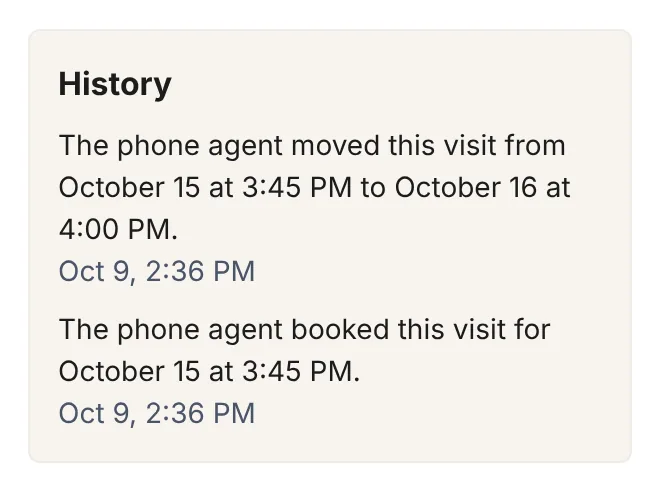
Answers the practice's line and books, moves and cancels visits in the same calendar the front desk is looking at. Every booking, move and cancellation is written on the visit, in words.
How the voice agent worksTelehealth
Video visits booked on the same calendar as every other visit, with the same open times, the same reminders and the same history on the visit.
Telehealth on the calendarText messages
Appointment reminders by text, from a phone number registered to the practice alone. A patient replies STOP to stop them and HELP for help.
How text reminders work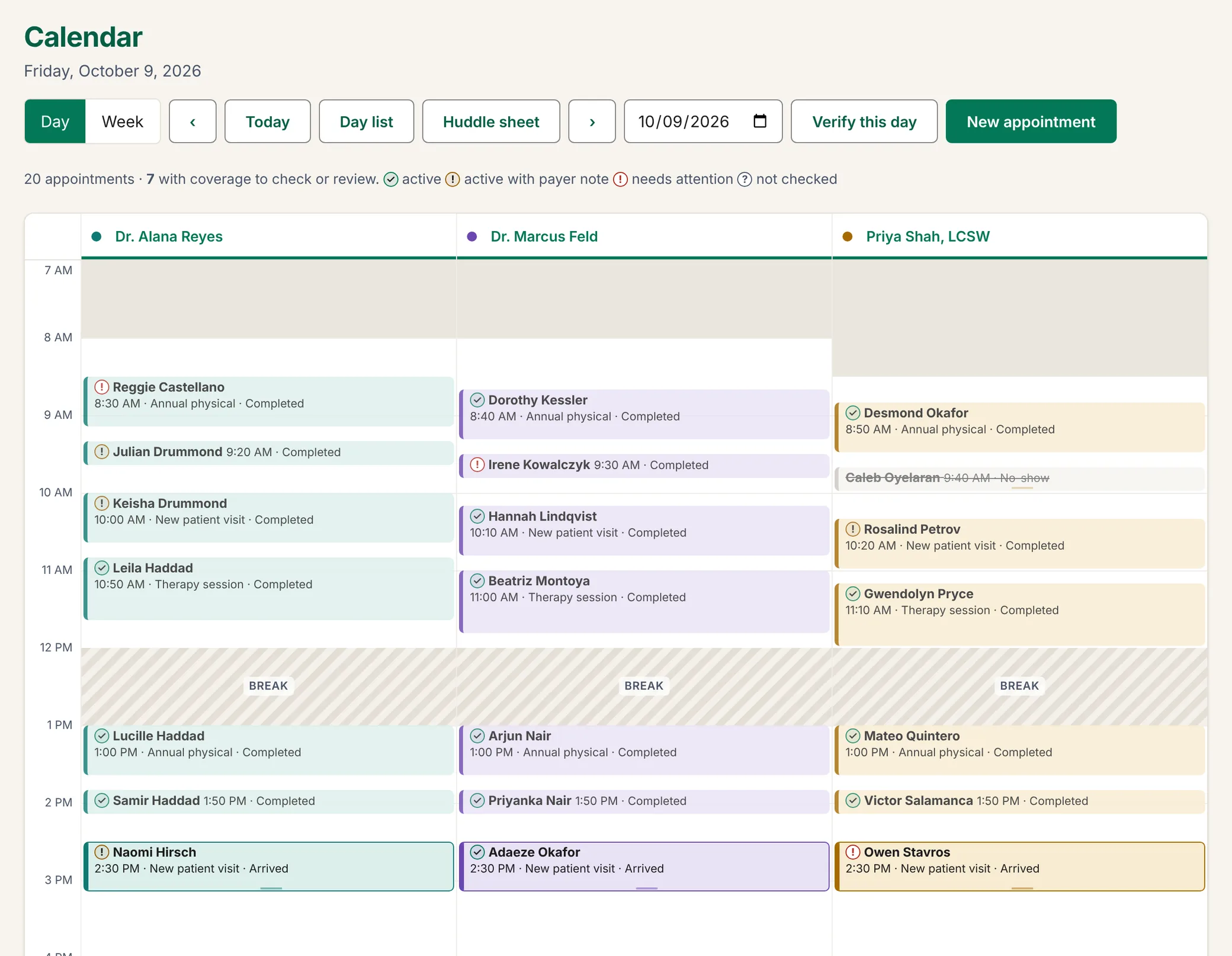
We already run the phones
Ellery Health is built by a phone company. Business phone systems, call queues and voice agents are what we set up and run every day.
So in Ellery the phone is not an afterthought. The voice agent answers the practice's line, finds an open time in the same calendar the front desk is looking at, and books, moves or cancels the visit. The front desk reads what it did on the visit itself, in a sentence.
Records that private practices can trust.
A tagline is a claim. These are four parts of it we can show you working today.
Who it is for
Independent medical and dental practices in the United States, typically with one to ten providers, where the same person often books the visit, checks the coverage and answers the phone.
For dental practices
Annual maximums, frequency limits and a hygiene column that never stops. What a dental front desk gets.
Dental practicesPricing
Three plans, priced per practice. What is in each, and what an extra check costs.
See pricingSecurity
What is built and verified, and a plain list of what we have not done yet.
Read the security pageCommon questions
Do we have to move everything at once?
No. You can start with insurance checks alone, which is the Verify plan, and add the calendar, reminders and payments later. A plan change takes effect as soon as it is made.
Is Ellery Health HIPAA certified?
No, and neither is anyone else. There is no HIPAA certification body and no certificate to hold. Ellery signs a business associate agreement with the practice and publishes the specific controls behind it on the security page.
Does it replace our EHR or practice management system?
No. Ellery runs the front desk: coverage, the schedule, reminders, payments at the desk and the phone. Your charting stays where it is.
Which insurance plans can you check?
Commercial plans, Medicare and Medicaid, through a healthcare clearinghouse. Some payers, Medicare among them, ask each practice to enroll once before they will answer, and we do that paperwork with you during setup. Tell us your five biggest payers and we will tell you where each one stands.
What does it cost?
Plans start at $79 a month per practice, with 150 insurance checks included. The pricing page has all three plans and what an extra check costs.
Talk to us
Book a 20-minute look. Tell us how many providers you have and what your front desk spends its day on. We will show you the app with a sample practice and answer what you ask.
- support@elleryhealth.net
- Phone
- (732) 444-7364
- Hours
- Monday to Friday, 9:00 am to 5:00 pm Eastern
Did you get a reminder from us?
If you received an appointment reminder from an elleryhealth.net address, it was sent by your medical or dental practice using Ellery Health. We do not send marketing email or marketing texts, and we never contact patients on our own behalf: every message relates to an appointment you already have.
To stop email reminders, use the unsubscribe link at the bottom of any reminder. It works immediately and needs no account or password. You can also ask the practice directly, or write to us at support@elleryhealth.net and we will pass it on.
Text reminders are not being sent yet. When your practice sends them, reply STOP to any text reminder to stop them, or HELP for help. Message and data rates may apply. The text message terms have the rest.
Questions about your appointment, your coverage or your bill should go to your practice: they hold your record and control it.